Episode Transcript
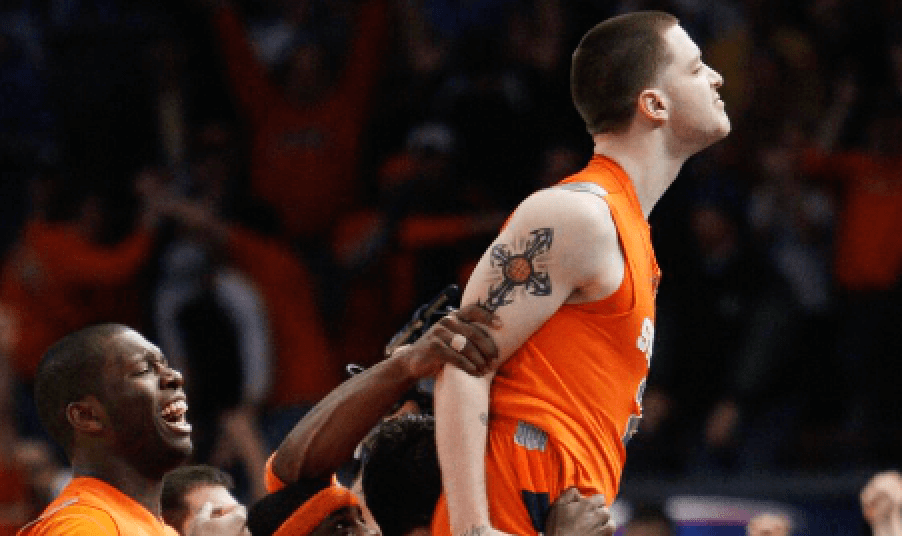
[00:00:00] Speaker A: Welcome back to the Nil Podcast. I'm your host, Jermaine Dixon, here with my brother, levance fields, Gary McGee. This is the podcast where legends share their truth. Today we got a certified Big east bucket getter, a dude who played with fire in his eyes and ice in his veins. A lot of dudes said that they, they live for the moment. This brother definitely lived in it. From Bay City to Syracuse, he put the orange on his back.
[00:00:25] Speaker B: He.
[00:00:25] Speaker A: He left his mark in college basketball history, iconic moments in the Garden, to a pro career overseas. And now he's using his platform to give back to the next generation with his Ed23 Foundation. One of the toughest Hoopers to ever do it on the Nile podcast. Today we got the one and only Eric Dievendorf.
[00:00:44] Speaker B: Man, I appreciate y', all, man. I know we had some battles at Pittsburgh, man. Look, I tell everybody, they asked me, what's the hardest place to go play. I said, man, if you ain't playing the Zoo, I mean, this is the zoo back then. I don't know about what they got going on right now, the Zoo. But when I. When I played at the zoo, it was different, man. I remember I was coming off, I got in trouble or whatever, and then the minute I walk out on the court whole. The whole crowd saying, saying old girl name, I'm like, oh, man, it's wild out here. But no, I, I, Man, I enjoyed the battles, man. It just. Every time that, you know, Syracuse Pig got together, it was like, you know what I mean?
[00:01:22] Speaker A: It was.
[00:01:22] Speaker B: It was a fist fight, man. And like you said, that was really the whole Big East. But, But y' all in particular, man, Pittsburgh, you guys were just tough battle. I mean, you know, we talk shit. That's just. That's just how it was. But, man, I appreciate y'. All.
[00:01:35] Speaker A: Yeah, yeah. No, we appreciate you coming on before, before we. And we definitely gonna get into autumn battles, but I wanted to ask you, when did you start your. Your foundation?
[00:01:46] Speaker B: Yeah, so I. I was always doing stuff in the community, whether it be back home in Michigan like we started. We did when. I don't know if y' all remember when Flint had the water crisis.
So I'm like 30 minutes from Flint, you know, Bay City, Saginaw, Flint. Everybody played in that area. Everybody kind of family. We. It started there. We raised like, 10, $15,000 to try to help the water crisis there back home. And then I just, you know, brought it back to Syracuse with, you know, shoe drives, coat drives, turkey drives, back to school. We do a Bunch of different events, golf, women's events. And we just recently had like a toy drive where we gave away gifts to a whole elementary school out here on the west side. So we, we actually started the, the foundation with where I got the 513C three years ago. So it's. It was three years in August that we, that we were really. That we were certified and. But we've been doing stuff just on our own. We just wanted to get the foundation going because now you got so many different options you could have, whether it's grants or. Yeah, I mean, it just, it just makes it more official. And then people want to be involved when it's like that.
[00:02:48] Speaker C: That's, that's, that's very commendable. Great to hear.
Just starting on your journey. What was the age where you started to pick up a basketball?
[00:02:56] Speaker B: Man, I. Seven years old, you know what I mean? My dad, he put the ball in my hand and since then I never looked back. I remember, like, I'm from a small city, so Bay City small, you know what I mean? People, they see Michigan, they like, oh, you from Detroit? How you act? No, I'm not. I lived in Detroit for a little bit, but I'm not from Detroit. Detroit is an hour and 20 minutes from Bay City. Bay City is 25, 30,000 people. So it was, it was a little city. Nobody really came out of there, you know, athlete wise, especially basketball. You didn't have, we didn't have any Division 1 players. Everybody was in Saginaw or Flint, you know, they had like the. Jason Richardson's, Calvin Torbert. So I don't know if those, those were like when I was growing up, but it was a hotbed, you know, Saginaw, Flint, Detroit super talent. So I was kind of the first one to come out of Bay City, but seven years old, man, I was before school, during lunch, after school, in the wintertime. I mean, y' all know what the wintertime is like in Cus. It's the same thing in Michigan. I was chipping the ice, shoveling the snow. So I was lucky. I fell in love with it early at, you know, seven years old. And then I just did it every single day. And that's rare, man, because a lot of kids, you know, especially young, they just trying to figure it out, you know what I mean? Especially nowadays. These kids, they totally different. But I was lucky enough to find my passion early and I just stuck with it.
[00:04:16] Speaker C: When'd you know you really had something with that?
[00:04:18] Speaker B: I got something here, man. Again, early, man, like I was, you know. You know how we had the little Saturday leagues or whatever, you know what I mean? When you. Fourth, fifth grade, I was getting like 60, 70, you know what I mean? These other kids didn't even know how to dribble yet. They was just, I'm going left hand, right hand at like, you know, third, fourth grade. These other kids just like, they trying to catch the ball still, you know what I'm saying? So it was. I was just head and shoulders above because I did it every day, you know what I'm saying? And again, I'm from a little city, so, like, I would get teased and all that. People didn't understand. They're like, why you got carrying that ball everywhere you go? You know what I'm saying? Like, why don't you want to hang out? I was just. I was lucky enough to. I had. I had a good support system around me. I didn't listen to all that. And. But yeah, early on, man, I was just. I was always in the gym at lunchtime. I was the only one outside shooting, you know what I mean? Everybody else was like, on the playground playing tag or whatever it is. But second grade, I had that. I had that ball, you know, under my arm and I was hooping. So, yeah, young man, I was. I was killing at a young age.
[00:05:16] Speaker A: You, you. You're on. Only sibling, only child.
[00:05:19] Speaker B: I got two sisters, so I'm the middle. I got one. One older and one younger sister.
[00:05:23] Speaker A: Okay, and did they. Did they hoop?
[00:05:25] Speaker B: Nah, man, they just had to hear. They had to hear about, hey, are you Eric's. Are you Eric's sister or is Eric your brother? That's all they heard. And still to this day, they like, hey, is Eric. Is Eric Dievendorf your brother? You know what I'm saying? We come from a small community, like I said, so it's, you know, I was able to stand out with basketball, but, you know, Syracuse, when they come to Syracuse, they like, Diefendorf was Eric must be a brother. So they get tired of that, man.
I think they did swim in soccer and all that. But, yeah, I guess I overshadowed them growing up a little bit with the hoop stuff, but they all good with it, man. They had some pretty cool experiences going to watch me and all that.
[00:06:03] Speaker A: So it's funny, me, you and Lavance, all three of us is the 05 class, right? I've never seen you coming up. I knew you was McDonald's, but I didn't see and I couldn't find it. Who did you play? AAU With.
[00:06:15] Speaker B: So I played with the Hurricanes, the Michigan Hurricanes. So it was Mustangs, and that was kind of the main one. But then, like, Hurricanes kind of branched off and did their own thing. And it was mostly all guys from Detroit, Flint area. We had a couple from Saginaw.
Um, but I was at the Hurricanes. It was Adidas at first. Then we went to Reebok. So I ended up playing on, you know, the Adidas Reebok circuit, which was a great circuit back then, you know, I mean, that was like. I don't know if you guys remember the abcd. Yeah, I played. So I went there two years and that, you know, the abcd, Nike, those are like, regardless of class, that's the top 150 kids in the country. Regardless, freshman scene, it don't even matter, you know what I mean? So my. My first year, I was there with the last class that was able to go out of high school. So all eight of them was at the abc. So, like, Josh Smith, Aerosmith, Sebastian, Sean Livingston, Robert Swift. I forget who else. Andre Black.
Who again, Dwight was there. Yeah, all them, man. So it was like that ABCD camp was wild, you know what I mean? And then the next one I went to, it was like O.J. and Bill Walker and Greg Odin, you know what I'm saying? Daquan Cook. So it was. I mean, those. It was. That circuit had some fire on it for sure.
[00:07:27] Speaker C: So for you, like you said, go ahead. Oh, yeah. For you, like you said in your area coming up in high school.
So you stayed there for three years to play high school basketball, correct?
[00:07:36] Speaker B: Yeah, I was at Bay City Central for three years, yeah.
[00:07:39] Speaker C: Oh, how was. How was the competition for you? Is that part of the reason why you decided to move on to go to Oak Hill for your last year? Or you just knew you.
[00:07:49] Speaker B: You.
[00:07:49] Speaker C: You were bigger than. Probably playing there still.
[00:07:51] Speaker B: I mean, it ended up being like that. But. So the conference that I played in was called the Saginaw Valley League, so we. We weren't really ever good, you know what I'm saying? Like, so my first year is coming. That was the first year we had any winning seasons. But we, like I said, we played against Flint Saginaw, so really it was probably the best conference in the state.
And people will argue with that and say Detroit Public School, and obviously, yeah, they were. So we were like 1 and 2 or 2 and 1. It'll flip, you know what I mean? So Saginaw, Arthur H. Time, number one team in the state, you know what I mean? Flint, the top 10. There was like four Flint teams, a couple Saginaw teams, Saginaw High. So it was some good competition. My freshman year, I ended up being on JV. Like, my first four games, I averaged like 49. My first. My first four games. And then they was like, boop. All right, bet. Well, that's enough. You know what I mean? We'll get you up on varsity. And I remember my first varsity game. I hit the game winning shot, you know what I mean?
Like, right off top. I was kind of, you know, I was confident in what I was doing. And my three years, I was all state, all conference every year.
And then. And then, yeah, my last year was kind of more so. I mean, I guess I. You could say I went for my grades. But at the time, I was at Bob Gibbons playing in the summer. Coach Smith and the whole Oak Hill staff was there. So they watched me. My coach had reached out to him a while ago, just like, hey, we're thinking about going to Oak Hill. Back then, you ain't. You had to call them. It wasn't like they was. They had to be like, all right, yeah, you good. You could come. Because that. Oak Hill back then, it was like, come on, man, they could get whoever they wanted. You know what I mean? So they came and watched, and they were like, yep, bet. You know, we want you to come next year. So I went there and, you know, that was when I played with, like, Ty Lawson, KD Jamat Gordon, AC Rivers, AMBA Fall, David Palmer. So we had like, eight, nine, Division one guys.
That was the first time I seen. So, like, you know, back then, when we. When we was growing up, it was still like a big man. Was a big man, you know what I'm saying? So you was still kind of like, you could throw it down low, but if you 6, 10, 6, 11, you probably getting it there. You not really going out on the perimeter. First time I step into the gym, I see this motherfucker, KD, you know what I mean? 6, 11, 6, whatever. He is doing the same shit I was doing, handling it, shooting it. So I'm like. My mind is like, yo, I never seen this in my life. Like, this was like he was before all this was happening, you know what I mean? So. And then you got Ty Lawson, who was just explosive, athletic. Like, he was dominant at that. At that level, you know what I mean? And, you know, obviously at the next. And then, you know, play for the Nuggets for a while. But that. That experience, that whole year, unbelievable, man. It prepared me For. For Syracuse. Like, I wasn't. When I got to Syracuse, I was like, man, I already.
Come on, man. Like, some of these guys on my high school team was better than y'. All. You know what I'm saying? So I was already.
I was already ready for that stage. So I'm glad I made that move that year, Oak Hill. That helped me a lot, man.
[00:10:45] Speaker C: What other schools was you looking at besides Syracuse? Like, what was your finalist, man?
[00:10:49] Speaker B: So it's crazy. I committed to Michigan State my sophomore year.
So Michigan, you know, back then it was like, if you the best in the state, you staying, you going to Michigan. Michigan State was always top 10, you know what I mean? Top izzo.
So, you know, Michigan. Michigan State had those offers. And at the time, my class in Michigan was. We had a cold class. It was myself, Chris Douglas Roberts. I don't know if you remember. You remember Chris Doug. Chris Doug was. Man, I don't know if people. People forget how good he was, man. He was unbelievable. Like 6, 5 point guard. He had all that. Then we had Wilson, Chandler, Jabari Curry, who end up, you know, they all played in the Big east at DePaul.
So, yeah, we had. We had an unbelievable class. So I committed to Michigan State early in. The reason I decommitted is because I went to the game in 2003 when Syracuse was played at Breslin center at Michigan State. This is my first time even seeing Cuse play.
If we. Look, I'm going to tell you this. We in Michigan, you see in Michigan, Michigan State, you got.
Yeah, you're not seeing exactly Big Ten. You're not seeing the New York, Big East. We're not seeing none of that, you know, so I didn't really have that feel of how that play was, you know what I'm saying? But Michigan State was more methodical. Half court, they gonna run through their sets, execute. That wasn't really my game. Like, I mean, could I do it? Yeah, but I like, I wanna get up and down. I wanna play, like, read or react. So when I. When I went to the game and I seen Syracuse, gmac, Melo, hack all them, I was like, damn. My AAU coach at the time was with me. I was like, man, we gotta call Syracuse. Like, I wa. I wanna call Syracuse and see what's up. So we called him, my coach called him. And that next week, Coach Bayheim. And at the time, Troy Weaver, who is. Who is now, I think. I don't know if he's in New Orleans or what, but he. He they flew down him and Bayheim flew down to the. One of my AAU practices at Detroit, Demby.
And after the practice, they offered me a scholarship right there. So I would have. I never would have, you know, went to Cuse if I didn't go to that. To that Michigan State game. But I had, like, Michigan. My top five was Michigan State, Florida, Louisville, North Carolina. And then Q, and then Q snuck in there, and then Michigan was like, outside. They was. They was the six. But I was really about to go to Florida. And I tell. And I tell dudes all the time. I'd have had two national championships, man. I had two. You'd have been there with that squad, too, huh? And so look, you remember the starting two was Lee Humphrey. Humphrey, yeah, man, I was taking that.
He was just a shooter, you know what I'm saying? But he fit what they needed because they had everything else. Taurine, Green, Brewer, Horford, Joakim Noah, you know what I'm saying? I was. I was going to be that two guard, and something happened where their coach who's recruiting me, I don't know what happened, but I didn't end up going because one of my best friends went there, Anthony Roberson, and he, who's from Saginaw, and he, you know, he killed there. So.
But that was. I really wanted to go there, too. Didn't work out. The Michigan State, Syracuse thing happened and that was it, man. After that game, I committed. They came down and. Yeah, I've been cues ever since.
[00:13:53] Speaker A: Your coach, Your coach that. That made the call to Syracuse was while you was at Oak Hill.
[00:13:58] Speaker B: Nah, because this was. I was at. It was my AU coach. This is my sophomore year.
[00:14:02] Speaker C: Oh, so this was your.
[00:14:03] Speaker A: This was during that sophomore year when you. Oh, yeah, yeah, because you committed your sophomore year.
[00:14:07] Speaker B: I committed. So then into, I think my junior year, when I was in my junior year, I went to the game. It was 2003, so I was a. Yeah, I was a Junior. It was 0303 04. Yeah, because my senior year was 04 05. Um, but, yeah, so it was my AAU coach who called.
And after that they came. They came to practice the next week. And I remember Bayheim, like, what do you. What do you want to go. Do you want to go to Hughes or what? What do you want to do?
And then it was like, yeah, man, that was it. You know what I mean? It didn't. It really didn't take a lot, you know?
[00:14:38] Speaker C: So what was it like? Like, when you first get to campus at Syracuse, like, how was. How was that adjustment, like, going from. No, no, big, big time prep school in Oak Hill, but going to Syracuse, the Carrier Dome, playing in front of thousands and thousands of people, how was that, man?
[00:14:53] Speaker B: Unbelievable. You know, my freshman year, we actually set the.
I think it was the biggest crowd at the time. It was G. Mac's last game, his senior. His senior year. Last game we played Villanova, it was like 33,500, something like that. So at the time, that was the biggest. So you just imagine you looking around, you know, you've been in the dome, you see all up top, it's all full. You know what I mean? So just the experience of being a play. And it's different now. I call the games for cues now. So I'm in the. I'm in the building and I'm like, man, it's about 8,000 in here. I'm like, man, we had that for a practice, you know what I mean? So, like, every game, I was used to 20, 25, 30,000 at every single game. You know, when you came, we played every Big east game.
I don't care if you play South Florida or Rutgers or whoever it was, you know what I'm saying? The teams that would be considered, you know, lower, lower teams or whatever, and we still had 25 hold out arena. What else you gonna do in Syracuse in the winter, man? Right. You better be going to the game. I don't know what to tell you if you're not.
[00:16:00] Speaker A: What was, what was your relationship with Bayon like?
[00:16:04] Speaker B: I mean, it's way better now, you know what I'm saying? Look, he was one of the. He a old school coach. Like, he came from that era with, you know, Bobby Knight, like the Dean Smiths. I don't. Maybe not that old, but he. He was coaching there for like 45 years, you know what I'm saying? So he was like, he. He always made sure that you knew. Like, hey, I'm the coach. We not friends. You know what I'm saying? We not. We not. And that's what the assistants were for, you know what I'm saying? Like Coach Hopkins or Coach Murphy or Coach Fine. Like, those were the guys who, like, if you was feeling some type of way, they like, eric, come over here.
Coach wasn't getting into all that. He ain't had time to, like, you know, make sure you felt good and all that. He. He was trying to win basketball games and I respect it because he was just like me. Like, he was a fiery dude, competitive. I can't tell you how many times, like, we just got into it just off of, like, being super competitive, like, nah, motherfucker, this is like, we gotta do again. Like, I ended up ultimately listening to him. Cause, I mean, why wouldn't I? It's a hall of fame. But you know how it is when you. You got two competitors really wanting to win. And, I mean, we butt heads plenty of times in practice and, you know, sometimes in the game just going back and forth. But, man, I needed it because I tell you what, he. He knew what time it was, and he was like, all right, are you good? Are you going to go and just. Let's go score some buckets. That's all. Like, you know what I'm saying? So he. He really gave that green light. Myself, Johnny Flynn, I remember one game against Province, he was like, look, you got a couple guys hurt. I need you guys to go and score 25 plus, you know what I mean? Like, you ain't got to tell me that anyway, But. But if you. If you gonna tell me, it. You just putting that battery in my back, you know what I'm saying? So that's. He. He was one of those coaches who. He. He just. I didn't need any confidence because we. That's how I was built, man. He was gonna give you more, you know what I'm saying? Let you be you. Let me be you. Like I said back to that. Michigan State, Tom isn't one of the greatest coaches, but I just feel sometimes it's more like systematic, you know what I'm saying? Like, instead of coaches, double fist. Two, one, two. Play. Come off the down screen, and once you catch it, rock out. You got to make a decision, you know what I'm saying? That's. And that's what basketball is, man, is read and react. You're not.
When you doing the sets and the execution, that's for teams who ain't got guys who can't rock, you know what I'm saying?
So they need that execution to be able to get open shots, you know what I'm saying? Even like with you guys, with Jamie Dixon, like, yeah, you ran sets, but at the end of the day, you just try to get in space so you can make a decision, you know what I'm saying? It wasn't like, we ain't complicated. We had four or five plays, man, and then we come off the down screen, double fist. You making a decision, man. You drive and kick or drive and drop, whatever it is. But that's why I love Bayha. He Simplifies stuff. And then, you know, if we needed to play, like, during a timeout or whatever, he could. He go X in O's for you. You know what I mean? But he kept it simple, and he just let us have our freedom to play and make mistakes. And I think for me, that's. That's what I needed.
[00:18:58] Speaker A: No, we could definitely see that. We could definitely see that playing Syracuse. Cause even though you said, I ain't gonna lie to you, Dixon used to kill me with slowdown 42, get every play. Now when I got there, Lavance was like, nah, nah, we playing. I said, we playing up and down. Lavance, senior year, we going my junior year.
[00:19:15] Speaker B: Well, think about this, man, how much easier it is to play when you ain't gotta play against a set defense every single time in half court, man, I'm banging my head against the wall. Having to play against Pittsburgh every single time in the half, man, that's hard to score. You need to get up and down one time. So I get some transition buckets or, you know, run out threes or whatever it is. Even now, like, I've watched the games, I'm like, man, what's their best offense? Transition?
Get out and try to get ahead of the defense. Because when they get into half court, like right now, this team in particular, they don't know how to execute for real. And then it should be where, like, they trying to get pick and roll or go ISO. But I don't know. Sometimes if you ain't got the guys who rocking like that and being able to make decisions, it's not going to work out. That's when you gonna have to be able to execute. You know, y'.
[00:20:01] Speaker C: All, boy sat back in that zone, made a hell for people, too.
[00:20:04] Speaker B: Yeah, Figure that out. Hey, look, motherfucker, I could talk shit on one end, and then I'm gonna come back down and I'm gonna sit right at that top. You got all that energy.
And then we had athletes.
[00:20:17] Speaker C: That was one thing from us that I know from my angle. I always used to be like, I felt like UConn as well.
It was just read and react like it was quick sets. Like, y' all played the same way where downscreen, get the ball, get out that person way, let me make a play. And like you said, we ran sets, but we had guys who could make plays, myself included. But I always thought about, dang, I wish we could play a little bit more loose like that, you know, but that just wasn't what we did at our university.
[00:20:43] Speaker B: Nah, but I think with, like, you guys, you have more something. Like when you had dejuan or when you had, like, going my freshman year, Aaron Gray, you know what I'm saying? So, like, they had. You got. You was throwing it down sometimes, and then they was good enough to be able to pass it out and run into the ball screen or whatever. It was our. Our play. Our Syracuse was guard dominated. Like, that's who was making the plays. Like, we guards win the games. We. We had Big Ayo, who was super efficient, but he was getting it off the drop, you know what I'm saying? So we was going there, drawing and dropping, barely. Where we going? Give it down to him. I mean, we did a few times, but that's just not really how our offense was. Like, he did an unbelievable job of rim running, too, so he got a lot of buckets like that. But we weren't like, the team to, like, throw it in the post and do all. Nah. Like, he was. If he was getting it, it was a handoff. He was going right back into a ball screen. And then we was just rocking out, making decisions.
[00:21:37] Speaker A: What was that. What was that moment where you was your welcome to the Big east, like, your moment even. Not the Big east, just college basketball period. Like, where he was like, oh, shit, I'm here.
This is real.
[00:21:49] Speaker B: You know what? It just. The first. I'm gonna say the first thing that popped in my head. So it was my freshman year, and we played UConn at home, and this was UConn when they had. Man, they had seven pros on their team that year. It was Rudy Gay, Marcus Williams, Rashad Anderson, Hilton Armstrong, Josh Boone, Dana Brown coming off the bench.
And then like, you know, the young, the guys in our class, Craig Austri, I forget who else. Who was it? I don't know if Jerome probably wasn't there yet. He was. He wasn't even in there because I was a little bit older than him, I think. Yeah, he. He wasn't there yet, but they had a mob. And I remember we were. I was so hype. I. I remember we. You know, when we did the. He did the lineups, the starting five, man, I turned and, and, and, and yelled at the, at our student section. Like, I was so hyped because, you know, that game, espn, that was a. That was.
I don't know if they. It was big Monday or something. It was one of those Super Tuesday. We had that back then. You know what I'm saying?
That was still going on, but. And that was the Joint when my man Marcus Williams had just got in trouble for the laptop stuff, you know what I'm saying? So they was on them. They had like laptops. They was on them, man. But I remember, man, I probably had like 17 that game. But we got, man, they beat us. They had to beat us by 15, 20, dog, that game. But I remember my kind of like, like wake up call was, man, this dude, Rudy Gay, he. And he ain't average, but 8, 9, 10, like, he wasn't. You was just seeing it. He was like, man, this dude unbelievable. He just going to the league just off jumping crazy. And then when he got to the league, he now you like, damn, where was that? You wasn't even shooting it like that. Now you're averaging 20 at Memphis, you know what I mean? But he just got so much better. But he caught one off the break and just looked back like this and straight jumped up and did a 360 off of nothing. And just like, I'm like, damn, that's. That's some different athleticism right there, you know what I mean? And then Marcus Williams, like, he was the ultimate maestro, you know what I'm saying? Like, he was just getting guys in a spot left handed, you know what I'm saying? Always in control.
Like if, if he was so. He was underrated to me, you know what I mean? I know he played in the league for a little bit, but just his pace and his. He wasn't like overly athletic, but he always got to his spots. He knew how to use his body. He was a good enough shooter to where if you was dipping off him, then he was going to knock it down. But that team right there was like, I'm like, damn, yeah, this Big east, something different. Because look, that, that first year was the first year that the Big east brought in like Marquette, Cincinnati, DePaul. So we was already like, Big east was already like that. But then you bring in Cincinnati was. They was nasty. They had, they had some nasty dudes on their team. They just want to rip your head off, you know what I'm saying? And I remember my freshman year, big fella. What's my big fella name, man? Under the rim, man. Dog. Yes, he was so. Hey, man, that was an intimidating dude right there, man. Like, he, he, he ain't even had to say nothing. Like, he was just under the rim looking real. He was always upset, you know what I'm saying? Like, so I, you know me, I ain't, I ain't gonna say it, but I'm still gonna talk my shit too. But it was a couple times.
I'm. You know, I mean, but it was that. That whole Big East.
Oh, man, it was unbelievable. But that. That UConn team, it was like, damn. All right, well, there's some other right here.
[00:25:07] Speaker C: It's crazy you say that because, you know, obviously we the same year and I got the same take my freshman year. We on the road. I tell them all the time, I'm like, yo, I'm looking at Rudy Gay like, yo, what is going on here, bro? Like, he's too good. Like, this is like they team was too stacked, like. And of course I'm competitive like you and I'm. But inside I'm like, they got too much, man. This is too much. Like, how they all like this, what college basketball is. So I totally get what you're saying when you say that, man. Then back on freshman year, watching you from afar, once again, we the same year. I'm like, yo, we finally again, we play record season. We matched up in the Big east championship. And the first. We was the first team who ever win would be the first team to win in four nights. And obviously y' all got that win. Larry Macamis.
[00:25:52] Speaker B: Yes, I remember that joint.
[00:25:53] Speaker C: I was pissed, man.
[00:25:55] Speaker B: Hey, look, we. We needed that because for real, we wouldn't have made a tournament without that run. We. We had to win. So it was Cincinnati, it was like a nine seed. And I tell you what, Devin Downey was a bro.
Devin Downey, bro. He was so tough to me. He. He was like that, for real. And then he ended up going to South Carolina and was killing there too, right?
Yeah, but that Cincinnati team like him, James White, Eric Hicks, they had Muhammad, they had a couple other shooters. I forget who, but they had a team too. Andy Kennedy was. Was coaching them. I remember that. They had a. They had a good ass team. For real. And then the second night, we ended up playing UConn. Number one team in the country. They was number one in the country. We was on our shit that game. Cause we won. 96, 94. Go lie G. Mac was like playing his ass off. He was. He went on a crazy run. And then the. The third game was Georgetown. We was down 15 and a half.
[00:26:48] Speaker C: That was crazy.
[00:26:49] Speaker B: Down 15 and a half in halftime. Coach Bayheim any say nothing? Because this motherfucker Derrick Coleman just, boom, popped in the. Popped in the locker room and just he. He was the. That was the halftime speech. Derrick Coleman, you know what I'm saying? Like, he was on like Terrence And. And all the bigs. Like, man, what y' all doing? This ain't serious. Because, you know, like, all the alum come to the Garden for that Big east, you know what I'm saying? Like, I don't care where you was at. UConn, Pittsburgh, Syracuse, they was there at that Garden. It was like he was on the stage performing the Garden. I mean, that's another conversation. That's a. That's a whole nother level that. You know what I mean? Playing in Madison Square.
Unbelievable. But he came through the door and then did his thing, cursed everybody out. We go out in the second half and come back, beat him, you know what I mean? I had to gmac, had to steal. I had the little go ahead layup at the end, and then they turned it over at the end, and that was it. And then we played Jaw, and it was that same thing. It was down to the wire. Yeah. I mean, he had. Had you, Carl Krauser, Aaron Gray, the big. You had a big front court. Cause y' all had big. Levon Kendall. Yep.
And he was a bruiser. Like, he was from. I remember he was from Canada. He was Canada. So think about Eric Gray, seven foot, heavy. Like, he not.
[00:28:03] Speaker C: That's.
[00:28:03] Speaker B: You ain't seeing no big like that playing in the league no more, man. He can't. He couldn't do it. You know what I'm saying? But he was. I mean, try to move that dude. You know what I'm saying? And he had, like, the soft touch. He could step out and shoot the three a little bit. And then Kendall and, I mean, y' all had a. I think Sam Young.
[00:28:18] Speaker C: Yeah, yeah. He was freshman with us.
[00:28:19] Speaker B: Yeah, that was a mob right there. So, like, we was just for that four games in. In. In. In four days. That was unbelievable run, man. Like, whoever would. Would win that game, you know what I'm saying? Like, you said, we would have done it. So that was. That was dope right there, especially being in my freshman year. Just.
[00:28:36] Speaker C: Just one more last thing on that for me. Like you said, y' all alumni always came back. So it used to be it was.
[00:28:41] Speaker B: Like a home game for y'.
[00:28:42] Speaker C: All. Like, so when we coming in, we playing after y' all for that Georgetown game. Like, so we there for them last seconds, and the place is rocking. Like, y'.
[00:28:51] Speaker B: All.
[00:28:51] Speaker C: Like, you know, every time y' all score, it's going crazy. Like, just. Just to touch on that, like you said, it's just a crazy feeling. I know I wasn't on the cues But I'm looking like, yo, like, what is this? Like, this moment is, like, going to be epic. Like, looking back now, it was obviously. But being there, hearing it, I was like, yo, I know y' all going crazy. Y' all feeding off that energy. Like, it's like a home game.
[00:29:12] Speaker B: Like. Like, man, none other St. John's that was their home court, but we. That was our home court for real, you know what I'm saying? Like, they might as well played in the Lou Carneseca arena, because that was the most fans they was getting. Whoever we was playing there, we was selling it out. We. At that time, I don't think the Knicks was really good like that. So we were selling the games out over them.
It was 15,000. We were selling it out every single time. And all the. All the alum in New York City, like Syracuse, that is our home. I mean, it was a couple of times we say, he was like, had commercials up at Syracuse, it would be. It'd be like Madison Square, home of the Orange. You know what I'm saying? Just. Just little stuff like that. But even to this day, man, it's so much Syracuse alum down there. I go down there and just moving around, somebody going to shout you out, Devo, or whatever it is like Syracuse, they travel crazy, man. It's unbelievable. I didn't been in the weirdest spots, and you'd be like, you wouldn't think of it. And motherfucker yelling your name. Devo. That's what they call me up here. Devo in queue. So if you hear Devo, they shouting at me, like, so it's. But yeah, man, the fan base, unreal. And they super passionate, you know what I'm saying? And I think for them, if you given everything you got, like, I was a dude who, like, I held my hat on that, like I was going to really play hard, you know I'm saying, talk shit, compete at a high level, and then just let the cars fall how they fell, you know what I'm saying? And they respect that. I think now a lot of these young dudes, they talented and skilled. Like some of the most talented, skilled dudes, like, ever. You feel what I'm saying? Like, that's this. It's a really, really skilled generation, you feel what I'm saying? But at the same time, they. They ain't competing hard, dog. They. They ain't. They ain't having the effort. Like, they lazy. Like, they moping. You feel what I'm saying? Like, even on the court, when I see it I. I'm like. I said, I'm calling the games. I'm seeing it. I'm like, y' all ain't. Man, you really good, but you ain't playing hard.
[00:31:01] Speaker A: They do a lot of. They do a lot of skill training nowadays, and they not. They're not hooping. They don't hoop like we did.
We hoop back in the day.
[00:31:08] Speaker B: You can't. You can't really teach the effort part, especially when you get to college. I tell dudes, like, I go on the radio, whatever, have my little podcast, and I'm like, look, if. If I got to talk to you about effort and energy, what we doing, man?
I can't. What are we doing? Like, that should have been in grade school. Like, whoever was coaching, like, that's the separator. Everybody's so good. When you get to this level, you know what I'm saying? Then think about the NBA, you know, 10 times better or whatever it is. The separation is how hard you competing. That's why, like. And I'm just going to use my man Wemby, for example, in the league. Yes, he a alien, but, dog, he competing so hard. You see what I'm saying? So, like, he already good. Now he out of this world just because he playing so hard. Man, I tell dudes all the time, you go, I want you on the team because you going to play hard. I could work, work with you. Everything else, we could figure it out.
[00:31:55] Speaker C: That's right.
[00:31:56] Speaker B: But you busting your ass. This dude who ain't busting his ass, he ain't. He gonna be inconsistent forever or even.
[00:32:03] Speaker A: Even take it like. Like somebody like, sga.
A guy who's. Yeah, he's. He's probably one of the top three, top four players in the league right now, but no one's seen that coming. But that work hard, he. He put the work in. Like, I. I want to be great. I ain't just. You know what I'm saying? Just hit a hoop. I'm going to show y' all motherfuckers.
[00:32:21] Speaker B: I'm a compete like kd. Like, come on, man. Kd. And this is like, I seen it with my. My own eyes, man. This dude was like, just. That's all he wanted to do was hoop. Like, just in the gym shots. And still to this day, he was like, you listen to him speak, man. That dude just want to hoop. He don't care about nothing else. No relationship.
Like, he just want to play ball. That's why he in his 17th year, averaging 25 and, like, 50 90, 40 type shit. And he. I mean, he's 37, like that. It's a.
You could tell the difference between dudes who really love the hoop, you know what I mean? Cause they. If you love the hoop, you gonna give it your all regardless. And rather than a dude who is really good and like, somebody telling them they good, you know what I'm saying? Like, it's a difference, you know what I'm saying? You could tell by the passion and the intensity that they play with.
[00:33:08] Speaker C: And then you add the nil to the. To the. Man, that changes everything.
[00:33:12] Speaker B: You got dudes getting a lot of money, getting paid a lot, man. I don't know. I don't know what the value is with some of these dudes. I'm like, he getting what? Hold on, man. Like, he need to give some of that back.
[00:33:24] Speaker C: I say it all the time, man. You gotta give it back, man. It don't be making no sense. I'm for everybody getting their money, but some of it don't make no sense, man. Serious.
[00:33:34] Speaker B: It don't make sense because these dudes ain't good enough to.
It's not adding up. Like, the money isn't equal in the production, you know what I'm saying? Like, it's not.
It's not equal in that. And I tell dudes, man, you better save that, save that, save that, because this might be the last.
And. And, man, you make 700, 800, you straightforward if you know what to do with it. You know what I'm saying? You good for a while. You could. You don't even gotta whatever. You could figure it out for a couple years or maybe a year, you know what I'm saying? If you do it right. But, man, everybody think they gonna go into the NBA, you know? I mean, I see dudes, like, got big old chains. I'm like, bro, you. That you just spent 30 racks for what? You still gotta pay taxes, you know what I'm saying? Like, you.
It's just. And again, like, I. I know. I. You know what? I say this too. Because, man, if they'd have gave me that bread back.
[00:34:28] Speaker C: That's what I'm about to ask you.
[00:34:29] Speaker B: Coming.
[00:34:30] Speaker C: Hey, you coming out of Oak Hill. What you asking for? What you gotta pay?
[00:34:34] Speaker B: I need a meal. I need seven figures.
That's not even. Some of these guards I'm seeing getting three meals, I need four.
It's not even. But. But again, like, everything happens for a reason. We wasn't supposed to get it at that time. I'd have been Listen, I wouldn't be here right now. Yeah, yeah, we. I'm. Everything works out how it's supposed to be.
I'm in a mindset where I need to be now.
[00:35:02] Speaker C: You said the dudes got the chain, though. That's. That's what I really realized. Nil, too. It's crazy you say that. What's. My man from Kansas? Remember I wrote y' all like, yo, oh, yeah, Hunter Dickinson.
[00:35:13] Speaker B: Was it Hunter?
[00:35:14] Speaker C: He was on the bench. One day I woke up from a nap, man.
I couldn't. Yo, the chain was so crazy. I said, yo, what is going on?
I text him like, Nil was getting, like, what is going on? That's when I realized they was really getting money. I said, oh, nah, son got on one of them.
[00:35:30] Speaker B: No, they getting. Man, these dudes on cues. It's a dude who just came as a shooter getting 750, you know what I'm saying? I'm like, damn.
I don't know.
It don't make no sense. It was a dude last year. I ain't gonna say no names, but in the game, he playing with a grill. In the game, man, it's a grill. I said, man, I can't even take you serious. It's a time and a place for that.
I'm taking my earrings, my chain. I don't have rings on when I'm hooping. This ain't. You ain't outside. This is college basketball, high level. I can't even take you serious if I see the grill in your mouth, you know what I'm saying? And that for me, I was like, damn, why the coach ain't say nothing to him like, how, like you. You just letting these dudes, like, take control if you letting that happen, you know what I'm saying? And I think a lot of coaches is like that now too, because they tiptoeing and shit, because they afraid, like, oh, he just gonna bounce and go somewhere else, man. All right, well, if that's the case, go ahead, because I can't coach like that, bro. If you ain't rocking with me, then you going somewhere else. You know what I'm saying? I gotta coach how I coach regardless. But these dudes tippy toeing around and. Oh, well, don't. Don't worry. You'll be okay, man. Look, that ain't. Man, I. I know when I grew up, my AU coaches was hitting me in my chest if I. If I didn't fucking get a rebound or some shit, you know what I'm saying? Like, it was one Time and we was in Cleveland. We went to Cleveland for AAU tournament, man, for the Hurricanes. We had, man, I'm telling you, we had McDonald's, all Americans, all through our program. It was, I don't know if you remember, like Deion Harris, Olu Famatimi, like those dudes, like growing up, like those dudes were older than me, but they were all beasts. I was in the younger teams, man. I remember one time some we was being too loud, man. Our coach made us go outside at 2 in the morning and run the whole block. You know, I'm saying just like this, this is how we. We grew up playing and being coached. Like it was like hard nose. Like, that's all. I didn't know any other way. You know, all that soft shit. I ain't. I didn't even know what that was.
[00:37:22] Speaker C: You know, Come from the same, right?
[00:37:25] Speaker A: All of us, all of us did.
[00:37:27] Speaker B: For real.
[00:37:29] Speaker A: How did you get into doing.
[00:37:33] Speaker B: The.
[00:37:33] Speaker A: Broadcast in that circus, man?
[00:37:35] Speaker B: It's.
And I didn't go to school for none of it. I did. I went to school. I tell everybody I went to school for basketball, man. That's what I.
[00:37:43] Speaker C: Everybody on this call.
[00:37:46] Speaker B: My. My major was communication engineering. But go.
[00:37:49] Speaker C: All right.
[00:37:50] Speaker B: Yeah, damn. You went for engineering. That's a right there.
[00:37:56] Speaker A: That boy lying. All right.
[00:37:58] Speaker B: Yeah. Cause damn, that's. You'd have had. I know I had 12 credits that. You'd have had damn near 20 something doing engineer classes. But. But I.
What is that? It was my fault. I forgot. What was that again?
What you just said.
Okay. Oh, yeah, sorry. My fault. Yeah. So I was, I was a communications major and when I. So when I came back from playing ball overseas, it was. I hopped on staff in 2016 for two years. And during that time I do like local radio and just pre game, post game stuff like you know how they do. They'll grab some coaches to talk and boom, boom, whatever it is. I went for a year to Detroit and coached at Detroit Mercy for a year. And then when I came back, I started my own like basketball stuff. And that's when I really kind of hopped into the. To the like local media. So I have my own show with this local media in Syracuse where I do all the post, pre post games. We'll have like watch parties, stuff like that. Then I end. I hopped in a podcast, what was it? Field of 68. I hopped on with them for a year. That was like my first kind of my first go at it. And then ever since then I just been doing more like Now I do a podcast with a time Aton Thomas who used to play at Syracuse. And just a bunch of, you know, local radio stuff. How the, the hoops are the broadcast with like espn. It started what I, I did the radio for the cues like I did during the games, you know what I'm saying? So like, hey, you want to do it? See what you are? And then it ended up being, hey, you want to try the television?
[00:39:29] Speaker C: I'm like, yes.
[00:39:30] Speaker B: All right, bet. Like I'm just going to throw myself in and like, and just learn as I go, you know, I know the game. You just got to learn the little different, you know, details with it or whatever.
I ended up doing that and then I got an opportunity because Corey Alexander, who does the games, I know y' all know Corey Alexander, his flight got canceled to Cuse and it was like a 12 o' clock game. They called me at 10 at night. I'm at my daughter's track meet and they're like, e, can you do the game tomorrow? It's at 12. I'm like, shit, who they play?
[00:40:00] Speaker A: Who's playing?
[00:40:01] Speaker B: Yeah, who's playing? I know Q is like the back of my hand. I don't need to do anything, you know what I'm saying? I already know them. But I had to do the Miami did my little scout report. I went up to the coach's office, got, you know, just do my little due diligence. Boom. Next, next day, ESPN2. That was my first, you know, experience being on ESPN. Did it. Boom. My man, I had the game winning. My man hit the game winning shot. Quadir Copeland against Miami. And I was, you know, I was on the call for my first one ever, you know what I'm saying? So I'm like crazy. That was a blessing, you know what I'm saying? Like God, God set that up real right there, you know what I mean? And then ever since then I just been getting more opportunities. So that season I got, you know, like four more games with, I did like Wake Forest, Clemson, I did a couple Notre Dame games. And then ever since then I just been getting more. So like last year I did 15 ACC games. So that's the most you can get until they have to give you a contract, you know what I'm saying? And then I do, I do all the Syracuse non conference games. And then this year it's been the same deal. So I've been, I did all the Syracuse non conference.
Next week or next, what is it, January 8th, I go do Cal at Virginia Tech.
So, yeah, just. I just been rolling with it, man. And the more, like, with anything, the more you do it, the more reps you get, the more comfortable you get doing it. You know what I'm saying? Now it's like in the beginning, it was like I was trying to, like, feel my way, navigate it. But then, you know, when they give me the little tips or whatever, they're like, hey, bring energy. Just be yourself. I'm like, all right, fuck it. I'm just going, boom. And that's what it is. Like, I'm just. I feel I can just be my authentic self on the call. I'm not trying to be Dick Vital or somebody else. I'm Eric Dievendorf, and I know the game. I'm speaking the game. And then again, you just kind of learn how to, like, the timing of it. Like, on the replays, they. They'll be in your ear, like, three point down on one end, dunk on the other. So you kind of got to get in your shit, be like, hey, oh. Feels on a break for three. Coming on the feather end, comes down. Haskins for a breakaway, whatever it is, you know what I'm saying? You just kind of get in your shit, and that's when you can really be creative. And the more you do it, the better you're gonna become at it, you know what I'm saying? So I'm just trying to just continue to rock with that, man. It's a blessing because I never thought I'd be, you know what I'm saying? When it's doing broadcasting for them.
[00:42:12] Speaker A: After that, after that first game, did you feel like, oh, like I did good, or I want to keep doing this, or was it like, I don't.
[00:42:20] Speaker B: Know, you know what I'm saying? You all. I think you always, like, at first kind of question yourself. You like, damn, all right, I could have did this better. So you nitpicking and shit, but. But I felt pretty comfortable, you know what I'm saying? And then when I started, you know, I hit a couple of my. My boys or, you know, one of my boys is an agent for caa and he. He does all the broadcasting, you know what I'm saying? So I was like, man, just. You know what you think they, like, look, shit, if you want to do it, you could do it, you know what I'm saying? So, like, that was. I was like, all right, Bet that's all I needed to hear, you know what I'm saying? This isn't like hooping, you know what I'M saying this is bit different. So, like. But once you. You get that from somebody else now, your confidence at a whole different. I'm like, all right, it. I'm. I'm about to go ahead and. And really try to, you know, see what I can do with this. And then just, you know, that's where it's at right now.
[00:43:06] Speaker C: As far as you watching film, is it the same, like, when you hoop.
[00:43:09] Speaker A: You watching.
[00:43:09] Speaker C: You gotta study film for a game or something like that? You watching it the same way or.
[00:43:13] Speaker B: No, like, so. So everybody probably do it different. I'm treating this like a scouting report, you know what I'm saying? So. So that's what I do. I watch like the first, like, the four games leading up to my game. So, like right now, just today, I was watching. I was watching Cal and I was watching Virginia Tech. And now just break them down player by player. All right, this is, you know what I'm saying? Like, shooter, score, driver, his tendencies, all that. And then you break down the overall team, you do the stats, and you kind of get a feel of, like, how they play, what they good at, stuff like that. And then, bro, just to be honest, like, I. I do crazy notes. I just like to be prepared, you know what I'm saying? So I'm doing all that real, real thorough shit, man. You probably not gonna use.
He might use 5% of that, bro. I'm just gonna be honest with you. You go into the. But it's there if I need it, you know what I'm saying? And it. And it's happened before where, like, something happens, you'd be like, oh, man, I'm about to use this because I've been. I did all this research. I'm about. So, like, whether it's a percentage or like, last five games he's been doing. So, like, that's something that, like, the producers see, they're like, oh, yeah, he. You know what I'm saying? He did his research. He was on his shit. Because the producers are the ones who give you jobs, you know what I'm saying? Those are the ones who, you know, keep giving you games. But. But yeah, I treat it like a scout report. And I know some dudes who just go in there straight blank. I'm like, yo, I can.
I couldn't even do that. I'm saying, like, I know because they was telling me some dudes was going there last year and they'll get the. They'll get the call because of the name, so they gonna get a chance, you Know what I'm saying? You got. But once you get in there, you. You gotta treat it like, like you really want to be good at it. You feel what I'm saying? So that's how I am with it. And, and I'm thorough with it. And then I've been lucky enough to like work with a lot of good dudes on the play by play side. Like, and it's funny because 90 of these dudes went to Syracuse.
[00:44:56] Speaker C: Wow.
[00:44:57] Speaker B: You know what I'm saying? And all the media broadcasting, it's all Syracuse. My producer, my play by play guy, they like, yeah, we went to Q alum 85 or some. I'm like, yo, I'm good. You know what I'm saying? Like, I know you're gonna look out. You know what I'm saying? And all these like, like the Drew Carter play by play Boston Celtics, I did games with him, Anish Schroff. Like, all these guys would be West Durham. Like all these dudes is legend on the play by play side. So it's. It's really me like humbling myself and kind of like, because I'm stepping into they shit, so to speak. You feel what I'm saying? So I'm kind of being the sponge and just trying to get better, learn from them too.
[00:45:34] Speaker A: Hey, hold up, G. My bad real quick, not to switch gears, but made me think of something. I heard that at Syracuse, behind it, and it was really no scouting report. Is that true? Like, it was just. Y' all just.
[00:45:48] Speaker B: We had a scout report, okay.
[00:45:51] Speaker A: Cause someone told me that and I was like, nah, ain't no way.
[00:45:54] Speaker B: He just.
[00:45:54] Speaker A: Because y' all read the two, three zone, man.
[00:45:57] Speaker B: Look, so we, first of all, we didn't watch film. We didn't. We don't. I mean, unless this is what we did. The night before the game, everybody go to a hotel, you know? Cause he. He want to make sure nobody going out doing all that.
That didn't matter. We was getting out if we need to get out. You know what I'm saying?
[00:46:12] Speaker C: Y' all did that at home games too. At home games.
[00:46:14] Speaker B: And that's why he did it. Yeah, at home games. Because back in the day, somebody went out, got hurt, I don't know, they got in a fight before the game. So ever since then, he was.
Y' all gotta be in the hotel. You know what I mean? But I was some. I was 50. 50, you know what I'm saying? But. But we'll. So we'll do the little. Have dinner and then he'll go over, like, the, like, five minutes of they plays. So if we doing y', all, he'll do. We'll do the offense, and then he'll show y' all defense, you know what I mean? Then he'll go through the personnel. This is what they like to do. 20 minutes, bro. And then he'll give us a sheet. This is boom. We might. Boom. All right. Bet. Man, we going to rock tomorrow. What? That's it. You know what I'm saying? We. At the end of the day, we going to hoop, you know what I'm saying? But so it wasn't like, we did have a scouting report, but coach was more so. Man, look, it's about us. Oh, no.
[00:47:00] Speaker A: So it was. It was really kind of like what dude said to me.
[00:47:03] Speaker B: Yeah, it's about us. Like, if we do what we supposed to do, you ain't got to Worry about what UConn doing, you know what I'm saying? We.
We gonna win the game. And it just, you know, sometimes we didn't do what we had to do.
[00:47:15] Speaker C: Scout on you probably was about 10, 15 minutes alone with us. We doing right.
Play that.
[00:47:23] Speaker B: You want to go left. He.
He want to go left. You want to go.
[00:47:27] Speaker C: I know that we got a whole paragraph for you. I wish we still had it. I told. Right.
We had that.
[00:47:32] Speaker B: You going left, man. Somebody from Louisville, when Louisville sent me, they scout. I forget who showed me they scout from Louisville, but somebody said. And, man, they had me. It was like, he's right handed, but he's going all left every single time. One of the best left hands.
It was. It's weird for me because my dad showed me how to use my left hand early, and I was just like. I'm like, man, I like laying that shit up more than dunk.
[00:47:55] Speaker C: Yeah.
[00:47:56] Speaker B: You know what I mean? You just be creative with shit and just smacking glass, you know what I'm saying? The first time you could smack glass, you like, man, that's better than a dunk.
You know what I'm saying? And my left hand was just. I don't know. I always had, like, a knack with my left, like, going all the way out here, flipping it up, doing all that. So when I was shooting right hand and people was trying to force me to my left, I'm like, all right. Bet that's, you know, I mean, I'm strong going left, you know what I mean? And then they're like, all right, we're going to force you, right? Well, like, I am. I'm right Handed, you know what I'm saying? So. But, yeah, those.
I seen some of those sky reports. Those. Those were funny. Ours wasn't maybe as thorough, you know what I'm saying? But it was just like, hey, guys, we don't go out here and compete, and we gonna get the job done. Yeah.
[00:48:37] Speaker C: I mean, I was gonna say, what. What moment at Syracuse are you most proud of, like, during your career?
[00:48:44] Speaker B: Probably, like winning the Big east championship. For sure. I mean, anytime you, You. You win something like that in a conference like that, I mean, it's a memorable moment.
Probably my most memorable moment that I. That I still get talked about to this day was the 6 OT. You know what I'm saying? Yukon game.
[00:49:00] Speaker A: Yeah.
[00:49:00] Speaker B: Oh, man, this is. People asking me that last week, you know what I'm saying? It's just. That's the first thing when they see me, they like, man, I remember that. Seven ot, six. Like, they. They naming all type of ot's. I'm like, look, man, six ot's, all right? You tell me you didn't watch it by saying that shit, you know what I'm saying? Cause you don't even know what number of OTs we went into. But it's that right there.
Madison Square Garden, the Big east tournament, UConn, like, everything was set up. You know what I mean? Where the teams, like the coaching matchup, the players, the venue, espn, you know what I'm saying? Like, when I hit the shot and it didn't count and I stepped in, man, look, I. I ain't thinking nothing. Doesn't plan. It was just a straight reaction, like, man, I'm here. I'm in Madison Square Garden. I'm about to go ahead and show myself real quick. And then that was kind of like the setup. I tell everybody that was the setup for the. What was to come. You feel what I'm saying? So what a great setup. And then, boom, didn't count. Now, six overtimes later, I mean, it was an instant classic. Right after the game. I'm talking about we. We. Me. Me and Ayo went to the. Went to the diner. It was probably like.
Probably like 2:33. We went to the diner. You know, New York City, people up still. And then when we went back to the hotel, they was playing the Instant Classic on espn. I'm like, damn, that's crazy.
So at that moment, we ain't really know, like, how you know, the magnitude of it. But now you sit back and, bro, that was an unbelievable experience. Like. And I'm biased, obviously, but that's the greatest college basketball game of all time, if you ask me. You know what I'm saying? It was just. It wasn't just the competition, the two teams, like how it went. Yeah, that game was set up, the storylines, everything was set up. You know what I mean?
[00:50:40] Speaker A: You found out in that game, right? Or am I tripping?
[00:50:42] Speaker B: Found out in the fourth in the four.
[00:50:44] Speaker A: Yeah. I was about to say, I remember you.
[00:50:45] Speaker B: Yeah.
[00:50:46] Speaker A: Not finishing the game.
[00:50:48] Speaker C: We was pissed. I think we just.
[00:50:50] Speaker A: We watching in the hotel.
[00:50:51] Speaker B: Yeah, we was. We pissed.
[00:50:52] Speaker A: We lost in West Virginia and we.
[00:50:55] Speaker B: Played West Virginia the next day and went into ot. Yeah, we went the next day. And they had a mob, too. I'm not gonna lie. They had a squad who. They had E. Banks truck, Brian Butler.
Butler, Yep, yep, Butler.
And then that was Huggins coaching, right? Yeah, yeah, yeah.
Hugs was gonna get him right, regardless. He was. He was drinking on the sideline as he coached.
[00:51:19] Speaker C: A little half court trap. That was a little nice three one. Yeah, it was.
[00:51:24] Speaker B: Coach always just say, throw a diagonal, throw a diagonal. They ain't got nobody in the back, you know what I'm saying? That 131 is so high that we just. You get on the wing, you try to. Try to just get a. From the baseline. Go ahead and. Yeah, I mean, but, man, that, that was. That was an unbelievable tournament. That.09. That was it,09. Yeah, it's 2009.
[00:51:45] Speaker A: 08.09.
[00:51:47] Speaker B: Yeah. Yeah, that was a hell of a tournament. And then. And you know what? It's crazy. I actually, that tournament, I think I broke like the all time scoring record for that tournament for. In the, in the, in the Big East.
And then who comes, like two years later, Kemba came and crushed that joint. I mean, he was. He had like 120, I had like 90. He had like 125 or something like that. But he was. He was cooking. But I. Yeah, I felt good for a couple years.
Yeah. For. For a couple years. Yeah. Y'.
[00:52:18] Speaker A: All. Oh, y' all lost that championship game, right?
[00:52:20] Speaker B: We lost to Louisville. Louisville, man, again, Louisville was top five. They just hit. They had William Samuel, Samardo, Samuels, Earl Clark. And they was big and athletic at that front line. Dude. They had big guards. And then Andre McGee, he was another, like, quick little guard in there. And what was the other dude pressing? Knowles.
Yeah, Agassosa.
[00:52:45] Speaker C: So they used to try to change the speed of the game. It was good, man.
[00:52:53] Speaker B: Yeah. Every team we named, bro, it was just. It was going to be a, you know, competing high level Every single time.
[00:53:00] Speaker C: How was it difference for you compared to you coming as a freshman playing with Jerry Mack to you being a, what, Junior, I believe, when Johnny. And Johnny comes in.
[00:53:10] Speaker B: Right.
[00:53:11] Speaker C: He's a freshman.
[00:53:13] Speaker B: Yeah. So my.
[00:53:15] Speaker C: The captain. How did that feel, that role changed for you?
[00:53:18] Speaker B: Man, you know what? I was such a dude coming in there, like, man, I'm the man, regardless. You know what I'm saying?
That's just. That's what made me good. Like, that's what kind of like, I had that chip on my shoulder, so I was like.
Like, you know, GMAC was obviously, you know, he was the man, but I'm like, I'm busting his ass in practice. What you mean? He can't guard me neither.
But. So that's. That's how I felt. But, like, I mean, me and gmac, we had a great relationship on and off the court, so I think that really helped us, you know, just, you know, play better in the games. I remember my first Big east game, it was at Notre Dame, and we both had, like. I had, like, 22, he had, like, 25. And we won at the Joy Center. And they had a good. They had a good mob. We forget Notre Dame. They had Chris Quinn, Colin Falls touring. Francis, big fella. They had my young fella coming in next year. Tory Jackson, he's from. From. From Saginaw. Carl Mac. Yeah, he from Saginaw. He's from. He. I. I watched them grow up play. That's like Draymond. He from five minutes from where I'm from. You know what I mean? So that's kind of like that whole area that's. There's some Hoopers out there, man. And it's like a. It's like a mentality. Like, again, like, it. Dudes wasn't necessarily the best, but, man, they was ready to rip your head off out there. It was dogs running around. You know what I'm saying? Like, that's. That's how we played. You know what I'm saying? So, like, when. When we was talking out there and dudes was like. I'm like, hold on.
[00:54:40] Speaker C: This.
[00:54:41] Speaker B: This. Come with it. And I thought, this. This regular. You know what I'm saying? Like, so dudes would take it offensive. I'm like, bro, I've been since 8 years old, grown men been talking to me. This is what.
You know what I'm saying? So this. This is kind of what it is. But. But no, me and gmac, hey, it was. That was a great. My freshman year, he. He helped me out Man, a lot. You know what I'm saying? And then fast forward to. To my junior year, man. Johnny Flynn was.
Bro, when I tell you this dude was something different. Like, you talk about some of the best guards of all time coming through the cues. He had to be up there, bro. Top. Top two, top three. For me, I. I seen it firsthand every day, practice. Like, he had a 46 inch vertical. Like, he was so creative with the ball, crafty. He was. He had flavor with his. It wasn't just like. You know what I'm saying? Like, he made it look good. You like that shit was. That was. You ain't even have to do it like that, but you did, you know what I'm saying? Like, you just. And then he could shoot the ball, and he was a. And with the separator. Because he was only 5:10. For real. 5:11, man. He was a straight dog. Like I'm talking about.
I thought I was talking shit, man. Listen, this dude, me and him, was ready to fight in practice multiple occasions every week, you know what I'm saying? Cause it's just two dudes that didn't want to back down from each other, regardless if he busting my ass or I'm busting his. Nobody trying to admit that, you know what I'm saying? All right, bet. Let me get the ball going right back, you know what I'm saying? But Johnny was just. He was a different animal, man. And that was like, same with G. It was like, I'm playing with myself in the back court. It was. It was, you know, one of the same or two of the same, you know what I'm saying? Like, so I was fortunate enough to play with some guys who had that same motor and that same mentality, like, all right, bro, your turn. Go ahead, get a bucket. You know what I'm saying? Like, this is. This is how we played. You know what I mean? So it was. I never really had a problem with, like, hey, I'm gonna be the man. I'm the man, man. Look, we was just rocking, you know what I mean? We didn't really have. I think it was more so like the media and all that they would try to make it like, hey, this is the best, whatever it is. But at the end of the day, we knew we could hoop, and we was just kind of playing off each other.
[00:56:41] Speaker A: Your senior year, y' all definitely had a. Y' all definitely was stacked. Did you feel like y' all could win the national title?
[00:56:48] Speaker B: So my senior, man, I left one. I had one year left, you know what I'm saying? So I left early.
I had tore my acl, so I missed a year.
[00:56:56] Speaker A: That was in your senior year?
[00:56:57] Speaker B: That was.
No, that was my red shirt junior year.
[00:57:01] Speaker A: Oh, okay.
[00:57:02] Speaker B: Yep. So we ended up losing to Blake Griffin in the Sweet 16.
We had, we had a three seed. We beat Stephen F. Austin and then we beat James Harden and them the second game. That's when James Harden, that was his last game. He had like eight. He couldn't do nothing with the zone, you know what I'm saying? It was. We had too many athletes, you know what I'm saying? If you wasn't knocking it down, it was going to be tough to be able to try to get in there because we had 6, 9, 6 10, 6, 9 across the bottom. What you, you get back.
Yeah, for real. So. And then that third game, Blake Griffin was just doing something different, you know what I'm saying? Hitting his head on the backboard and yeah, he had like 30 and 15 and then I think his brother had played good. And then who, who really was. Who killed us and didn't hit threes all season. And if of course against us, he hit seven. Tony Crockett, Tony Crocker, he was wearing the long sleeves.
I'm like, man, you ain't hit seven threes in a game ever. All the way back to high school, bro.
But nah, he was, he was hooping, though. He was, he could play too. He was a good defender. I mean, they had, they had a good squad. Oklahoma. They, they played well, man. But so that was my last year, you know, I mean, and then I, I declare for the draft. But that, that year after me that they was number one in the country with like Andy Rollins, Wes Johnson, they had Scoop, they had Ayo.
They had a lot of guys come back. I think me, Johnny and Paul were the only guys that had left. But that opened up like for other guys to come in and rock up because we had dudes. Nah, it wasn't like, like Andy was like coming off the bench in that 6 OT game. We, we wouldn't, we wouldn't even win it if he didn't. He came off, off those down screens like it was one of, he was one of the best shooters I ever seen. GMAC was like a volume shooter, you know what I'm saying? He, and he, he shot a lot of shots, you know what I'm saying? And he could knock him down, but he was only like 33%, you know what I mean? Andy was like a, like a Man, I'm telling you, dog, it was so picture perfect too, when he shot that thing, you know what I mean? And he was an underrated playmaker, you know? So that, that, that next year they had, I think they were 34 and 2 and Wes Johnson was like the Big east player of the year that year, you know what I'm saying?
Yeah, he was killing. He was first team All American. And they end up losing to Butler in the Elite Eight because Ayo had hurt his knee and he, he didn't even play in the tournament. They lost the Butler, Gordon Haywood in them.
[00:59:31] Speaker C: I didn't know he played in the tournament.
[00:59:33] Speaker B: Yeah, he, that's, that's what they say. Like, if they would have had him, we'd have won a national champion. He, he, he tore his something in the Big east tournament versus. Damn, I think it was Georgetown that year.
[00:59:43] Speaker C: Gordon Haywood strikes again, man.
[00:59:45] Speaker B: Gordon Haywood shelving Mack Gordon Haywood.
[00:59:48] Speaker C: But he knows very well I lost two of my seniors.
Don't forget to say that part. Throw that part in there. Number one seed out of here.
Yeah, man, they had that juice going. Brad Stevens. That tournament is brutal, man. It's brutal, man.
[01:00:06] Speaker B: Yeah, throw out the seeding, man. Unless you doing a one in 16, I mean, and even sometimes then out.
[01:00:14] Speaker C: Of your four years, what was.
[01:00:15] Speaker B: I don't know.
[01:00:15] Speaker C: Did we just ask that? But out of your four years, what was the, the best chance you felt you had? Was it your freshman year to win the National? Like, out of all four years, was your best?
[01:00:24] Speaker B: Yeah, it was probably my, my junior. We, when we got to the sweet 16, like, we had a great draw. We was a three seed. We went to Miami, man. Had a blast in Miami. You know what I'm saying? Cause, you know, you got the game and then you got a little. You got a couple of days in between. We had a great time, man. But no, we. So that first weekend, boom, blew through it. We was feeling good, and then we felt good going in to Oklahoma. I think they was a, I want to say a two seed. So it was a two verse three seed. And if we had won that, we'd have played North Carolina, who ended up winning the national championship. But that was probably. That was the furthest I went.
[01:00:59] Speaker A: Yeah, I think. Was it just so it'd be your sophomore year. Dante Grant Daunte stayed there two years, right?
[01:01:06] Speaker B: He was there. So he was there my junior. So freshman, Sophomore, junior year, My junior year. I tore my ACL like the 10th game. That's when Dante and Johnny's freshman year, so I only played 10 games with Dante, but we was killing. We was both averaging, like, 18.
But me and Andy was out that year with torn ACLs, so they ended up. We didn't even make the tournament that year.
[01:01:29] Speaker A: No, I know. I was gonna ask you how I was playing with Dante, but I forgot. That's the year you got hurt.
[01:01:33] Speaker B: Yeah, no, Dante's my man. And then we ended up rocking again in the tbt, you know what I'm saying? So we. That was dope. That was a dope experience. I played in TBT for, like, seven years, right? We lost y' all that one time.
[01:01:48] Speaker A: Yeah.
[01:01:52] Speaker C: I knew I should have hit you on Twitter, man. I said, yo, they gonna win. He's still in it. These guys ran.
[01:01:58] Speaker B: He gave up.
[01:01:59] Speaker C: I said, I should hit this dude. And that's the year y' all won, bro. I swear to God. I said, oh, my. Hey, they beat us in the second round. I played against.
[01:02:09] Speaker B: Yoria. Yeah. And that was kind of like that.
So, like, my first. Because I wasn't even. So I think maybe my first year playing, I was still playing overseas or something, but I was. My whole seven years, I wasn't even hooping overseas. Like, these dudes playing in the tournament was like, hoop coming back still, man, I had. All right, bet I got two months. All right, let's get it. Like, I'm gonna go ahead. And I was always, like, staying in shape. But again, man, like, when I played in that, man, that competitive side always came out. And I'm like, man, this motherfucker can't hold me. Like, I'm about to. You know what I mean? And we went back to Q's shit talk, and everything came back out of me. You know what I mean? So, like, that was fun. That was real fun. That felt like playing back in Cuse again. And then, yeah, we had Tay, and. But that 20, 21 year, that was the year when I was like. I probably wasn't in shape or for real, like, playing like that. But shit, you see who we brought on the team? We had Tyrese rice, DeAndre Kane, DJ Kennedy. So I was like, all right, bet. I'll play the background, take 80 racks real quick.
Shoot, I've been. I mean, we was always right there. Like, that one year Dante played, we got to the Final Four in Baltimore and lost to overseas elite. And we probably, like, by four or five. Like, that was like, that year. I was like, man, and I was cooking. I'm talking about. I was cooking that tournament like, 21. And I'm. And again, I ain't even been playing overseas, but after that tournament, I'm like, man, hold on, man. I'm about to get an agent again.
You know what I'm saying? It ain't even end up.
End up playing because I just ended up doing what I was doing already, man. I'll tell you what. Just when you playing that and everything started coming back, you like, hold on, man, I gotta. I'll go try out or something real quick.
[01:03:50] Speaker C: Definitely was. That's how I felt getting back with them. I was like. It was like college all over again. I ain't see these dudes be on the team. We competing for some like that. That was the best thing about.
[01:04:00] Speaker B: For sure.
And then even. And. And then, y' all know, like, even off the court, man, just hanging with dudes and like, just reminiscing, like. Cause so like, I was playing with, like, it was so many different eras. Like, I was playing with Hack, you know what I'm saying? I looked up the Hack playing like Hakeem Ward, you know what I'm saying? So, like, Hack played with us and then like, Ayo and like, I had the young fellas. Chris Joe was playing with me, you know what I'm saying? And my og, rest in peace, Lawrence Moten, that was one of my really good friends. Like, he was coaching, you know what I'm saying? So, like, Pearl Washington was on the bench with us our first game, you know what I'm saying? Like, you know, Pearl, you from Brooklyn. Like, that's Boys and Girls Club. Like, this is.
This is. That's a heavy name right there. That's not just like you say, Pearl, you like.
[01:04:45] Speaker A: All right.
[01:04:45] Speaker B: Yeah.
Hey, look, I tell you what, it's funny because so. So you know, Syracuse, if. When we was in Cubes, we always used to like, take. I used to take the bus down to the city quick. $20 on the greyhound. All right, I'll take that joint quick and you'll be down there for us. So I was. I was always down. And at the time, my man was playing for the Knicks, Wilson Chandler, you know what I'm saying? So I was always down in the city. I used to play in the eight ball classic Jamal Tinsley joint.
All right, man. Man, I went crazy. Had like 51 game in the joint, and we brought like a cuse team down, you know what I mean? But, man, you know, I'm talking about the environment. I love the environment because everybody around, you know what I'm saying? It's just like, man, it was. It was love, man. My man was from down from a bed style. He had moved up to Q. His name was Press, but he, he, he, he. So he brought us down. That was his neighborhood. So we rocked out a few. But I was always back and forth through the city, you know what I mean? Like, Brooklyn, I was. I had people in Canarsie, Besta. I was all through Brooklyn.
[01:05:56] Speaker C: That's why I liked you from afar, man. Cause I class, man. I'm like, the first time I see you, bro, I see you in the slam, you know, this is no. It's no Internet. And I ever like that. You know, it's coming. I open the slam, you in there, tattoo. I'm like, yo, this white boy, man.
Never seen you on the circuit, though. I'm just always reading about you, like, oh, who is this dude? See you going to Syracuse. I'm like, yeah, I'm going big East. I' ma finally get to play against this dude. I finally seen you.
[01:06:27] Speaker A: I'm not.
[01:06:27] Speaker C: I think one of y'.
[01:06:28] Speaker B: All.
[01:06:28] Speaker C: Y' all Oko games was on national tv. I'm not sure who.
[01:06:32] Speaker B: Yeah, we play St. Pats.
[01:06:33] Speaker C: And you was popping. I was like, oh, that's my kind of guy, man.
[01:06:37] Speaker B: We beat their character, them by like 45. On national television.
[01:06:40] Speaker C: Was woofing, and I. I just liked that from before. That's how I grew up. You know what I'm saying? Like, if you don't like it, stop me, you know? I mean, so as much as I was trying to track you down, I was also like, I like that guy. You know what I mean? I always liked how you going about your.
[01:06:56] Speaker B: Hey, that's again, man, Like, I don't know how everybody grew up playing, but that was like, a part of it. When playing. Growing up, I was playing with grown men at, like, 9, you know what I'm saying? Like, so we was like, you know, the wide. They had the little men's league, where they come in from work and play at lunch, man, I was 8, 9 years old in there. They was letting me rock, though. These dudes, 45, 50 years old, you know what I'm saying? So they like a little nine year old hit a shot on them. They like, motherfucker, like, all that. So, like, from a. That's just like. That was in me from the beginning. Like, these dudes was like, that's just how the game was. So I was. If it didn't. If it. If that wasn't happening, I'm like, yo, what's going on, man. Like, this is too quiet in this. You know what I'm saying? We got. Let's get going a little bit.
[01:07:38] Speaker A: We ain't going to keep going too long. But I just want to ask a few things about overseas. What was the first country you played in when you went overseas?
[01:07:46] Speaker B: So I. When I came out, I did. I did a little minicamp with the Lakers, and that was like, the year after they won the championship. So, like, all right, what you sending me here for? You know what I'm saying? Like, it wasn't no spots. It was a hell of an experience, you know what I'm saying?
And then from there, I did the G league and.
Or the. It was a D league at the time. And then I did a. I did a month there, and then I went over to New Zealand. So I went to New Zealand, and my first game in New Zealand, I had like 49.
My. My first game. And from then, I'm like, all right, I like it here. It's. It's. It's dope here. It's a great country, you know what I'm saying? So I ended up. We won the championship my first year. After that, I signed to go play in Australia.
And then. Which was. Which now is like, one of the top leagues in the world.
And. And I played with Mel. I played with Melbourne.
It was Melbourne Tigers at the time. You know what I'm saying? You may. You know. You know Corey Williams?
Yep. Rest in peace. Corey. He was on my team. That was my team, you know what I'm saying? You talk about New York City. That's New York City for real.
New York City for real. The minute he started talking, he was like, okay, you from the Bronx. You already know. But. But. So New Zealand took me to Australia, and, man, unbelievable countries, bro. Like, those places to live. Like, you'll live there right now, you know, I was just. Actually, I went to New Zealand last summer and did a camp. Like, those are the connections that you keep, you know? That's what's up. Yup, yup. I went back there. My man. One of my. My point guard who was with me out there, one of my good friends stayed with him and his fam did a camp out there, rocked out Steven Adams people out there, you know what I'm saying? So that's. I played with him. He was playing with me on the, like, the younger joint, you know what I'm saying? Like, he was 16. He, like this skinny, big now. He like Aquaman, you know what I'm Saying like, one of the strongest dudes in the, in the league. Just moving people for no reason, you know what I'm saying? So that was a hell of an experience. And then from there I did Turkey.
I think I did a little stint again in the D league. I was at Idaho for a little bit. And I was at Reno, which was cool. That was, that was a cool experience. Then I went to Ukraine for eight months, which was different. Ukraine was different, but it was a good league. Like, say it again.
[01:09:58] Speaker A: What year was this? My bad. What year was it?
[01:10:00] Speaker B: I want to say 2012 maybe. Okay, what year was you in Turkey? Shit, that was like. I went. I only went for two months. Cause it was one of them things where like our season in Australia was shorter, so we still had two months from there. So I went and shot right there and played in Turkey for those two months. But I didn't, I didn't play a, a full season there, but I did in Ukraine. But they had a good league. They had. That was like Malcolm Delaney and them.
[01:10:27] Speaker A: That's why I was asking, because I know Malcolm was over there.
[01:10:30] Speaker B: He was killing Bunavelnik, that's who he played with. And Frank, my man from la. Frank Moyer?
Nah, he from la. He left handed.
[01:10:40] Speaker C: Camera.
[01:10:40] Speaker B: I think Frank Martin, no big, Stronger, stronger guard, number five, man. He'd be with Scoop now all the time. I forget his man.
I'm mad, I can't, I don't know. But he played with Malcolm, you know what I'm saying? Left handed, dude, he from la. They had a squad, man. That was an experience in Ukraine, dude. Eastern Europe different, you know what I'm saying?
Eastern Europe different. So I was eight months there and then I went, man, I had got hurt so many times. So you know that when you get hurt, it's just like you, you don't have one full year. You jumping, you hopping, you know what I'm saying? So I was in Israel for three months, hurt my back, had to get back surgery, hopped to Greece for a month, back fucked up again, then went back to New Zealand, you know what I'm saying? And then I ended up going to New Zealand for like three more years and just, and just kind of did that. And then I was like, you know what, man? I got, I had this, my girls, you know what I'm saying? So I was like, I want to be able to see them grow up.
They 17 and 15. I still, if I was still rocking for real playing, I would have missed everything, you know what I'm Saying, so I was able to be here for their whole middle school, high school, which is a blessing. So my last year, I remember hitting coach Boeheim and just asking him, could I hop on staff, you know what I mean? Just whatever you got for me. I just want to be home with the girls, you know what I'm saying? So he let me come on staff, like a player development role for a couple years. And from there it ended up, it turned into like a real assistant job for Detroit Mercy under Mike Davis. So I did that for a year and then after that I just came home and I started my own stuff, you know, I mean, with the foundation and the. I do camps all over northeast and. And individual workouts and stuff like that. And then the broadcasting came and, and that's what I'm doing now. So. Yeah, man, I. Seven years overseas. Hell of an experience, dude. You know, when you go every, every summer, I'm like, man, I wonder where I'm going now. You know what I'm saying? Like, it's just. Yeah, it was, it was a cool experience. Going over and, and you know, all the different cultures and meeting people, it was, it was pretty dope.
[01:12:36] Speaker C: What was your favorite place to play where you was at? New Zealand or Australia.
[01:12:40] Speaker B: I mean, as far as like playing or like just being there, overall, total playing, being there, probably Australia, New Zealand, you know what I mean? Because you gotta think you, you know, it. You only playing ball. I mean, if you. Over in Europe, they might do two a days or whatever, but in Israel and in Australia, we only have one practice a day, you know, I'm saying. So after those two, three hours, I mean, you just out here, you know, I'm saying. So in Australia, New Zealand was. It was love, you know what I'm saying? So I was. That's why I went back, you know what I'm saying? To. To be able to do camps and do all that. So those two countries were by far. And Israel is dope too. I wish I would have stayed a little bit longer in Israel, but I got in Israel, I was in a fool. A Fula. So at that time, a Fula had just dropped from Division one.
Yeah. And they was trying to hop back up. They was like the best Division 2 team trying to get back up. So that's the year I was at and we was rocking and then I got hurt and then I had to leave. I. Who was on my team, Jeff Allen. You remember Jeff who played?
Yeah, yeah, Jeff. Long ass arm Jeff. Yup. So he was, he's still playing, man?
[01:13:43] Speaker A: Yeah, he's still playing.
[01:13:45] Speaker B: He's still playing Venezuela or something.
[01:13:48] Speaker A: A lot of. A lot of dudes from D.C. still playing. Oh, that's why I wanted to ask you, and I do this with Gary a lot. Who do you feel, when you look at the East Coast, West Coast, Midwest, the South, where do you feel the best basketball players come from? And don't be biased, too. You know what I'm saying?
[01:14:05] Speaker C: Talk to him, talk to him, talk to him.
[01:14:07] Speaker A: I know you love your area, but where do you honestly feel the best players come from? Or even just from your generation?
[01:14:14] Speaker B: So, like, my, like, mentality wise, like, I love Midwest, I just love Michigan. Like, Detroit, Chicago, like, dudes are real dogs. And like, if you ever been there and played, like, growing up, we had a thing. Like, I'm not from Detroit, but I was there all the time, like, with some of my best friends there, you know what I mean? So we had a thing where, like, Detroit versus Chicago that we play every summer. Just, like, they bring their community center versus our community center, and you right in the east side, like, right in the hood, you know what I'm saying? So that's kind of where it started with me as far as, like, that mentality. Because, man, I'm telling you, Chicago come to Detroit, or. And vice versa, Detroit going to Chicago, everybody coming. I mean, I'm telling you, like, it's. It's a little gym, but it's packed. Dudes talking shit, they betting on the side. It's all type of shit going on, you know what I mean? So, like, when I'm. When I'm in that atmosphere, it's like, yo, that's the funnest of all time. Like, for me as a Hooper, like, playing in that. And I experienced it early. Like the Detroit, Chicago, even Milwaukee, you know, you had some guys coming from there. So, like, the Midwest, the mentality, dudes was like, always, like, playing. Like, man, they ain't eight, you feel what I'm saying? Like, for real, like, that's how dudes was playing. Like you was trying to take their food from them. Like, that's how I played growing up. But then I got to travel around and I mean, New York got obviously some of the most talented and creative dudes with the ball in their hands. Like, they could just do it all, you know what I'm saying? And then obviously, New York City, it's like, if you talking about New York City and basketball, it's like, it just go together, you know what I'm saying? So it's just. It's just a whole different energy and vibe. Even when I go to the city now, when you hit through that tunnel, it's like the energy totally different, you know what I'm saying? It just, it take over your body. And then like west coast, they more like finesse to me, you know what I'm saying? It's more like a finesse, laid back game.
And I don't want to say soft because I don't want to put that label on dudes, but that's how I was kind of feeling maybe as a young boy. I'm like, man, these dudes good, but they soft, you know what I'm saying? Like, that side and down south was like, I don't know. You know what I'm saying? Down south they had some, they had some Hoopers too, but I was always like, Midwest, East Coast.
That's. That's kind of how.
You know what I'm saying? And then you'd be like, oh, man, LA got all these dudes, man. Look, I'm just telling you from my experience, man, you know what I'm saying? Like, the biggest, it was dudes who I played against in Detroit. Never got even ever got to play college basketball. But man, I tell you what, you come down the way they tearing the best dude up, it's just how I go. And you know that. Everybody know that from D.C. or, or new York, you got dudes like that. So, like, I grew up playing with those type of dudes who, like, they didn't end up going to the level we got because they was into something else or what, or whatever it was, but it was probably better than me for real, you know what I'm saying? And they. So that's kind of like, I'm more like on a mindset type thing, you know what I'm saying? Like how. What's your approach to it? Because everybody can hoop. I want that like Anthony Edwards approach.
Like, that's what, that's the mentality. I like, like, dude going out there like, man, you can't fuck with me. You know what I'm saying? And that's kind of how everybody I play with. That's what they felt like, all right, man, go ahead.
[01:17:19] Speaker A: My bad.
[01:17:19] Speaker C: That's what's up, man. That's crazy. There's a lot of similarities. Like, I'm saying that I tell people that all the time. It's people you'll never hear from where I'm from. But that's who shaped my game. Cause they dudes was Nice. But they ain't go to college, they ain't playing you. But you come to my neighborhood, you're gonna be like, nah, bro, he nice.
[01:17:38] Speaker B: But like, he's saying, man, look, it was so I played when I played aau, man, and it's. I was blessed enough to where, you know I'm saying my parents made sure I was straight. Everything was, you know, I mean, like, some people's situations was totally different down the road, you know what I'm saying? Like, just whatever it was, you know what I'm saying? Single family, single mom, just. It was a. It was a tough situation. Like, didn't have lights in the house, all type of stuff. I remember dudes coming on trips, man, with straight trash bags, you know what I'm saying? Like, trash bags were full of, like, full of clothes. Ain't no duffel. They ain't had no duffel bags or nothing like that, you know what I'm saying? That's kind of like. I'm saying that to say, like, that's kind of like the mentality I got, you know what I'm saying? Like, these dudes was like, yo, look, they was just trying to get out the house and get away for a while, so they ain't had to deal with shit to go, you know what I'm saying? So it was way bigger than hoop. Like, they was trying to go out and like, just like, have a little bit of fun, you know what I'm saying? And, like. And like, take their mind off a lot of you. 14 years old, you got to deal with all this stuff that you're not supposed to be dealing with, you know what I'm saying? So, like, it. It was a lot dudes played like that, you know what I'm saying? Like, dudes played angry, you feel what I'm saying? So that was kind of. I grew up, like, you know, playing. Playing like that. And that's kind of stuck with me throughout.
[01:18:57] Speaker A: I tell people all the time, my. My mom passed away when I was seven years old. And my brother, my brothers, two of the brothers, the first thing they did, they went to the basketball court. I'm getting. I'm getting this off my head right now. I'm going to go hoop. And that's. That's just the mentality of that, and that's what I seen. That's the mentality that we had growing up, man.
[01:19:14] Speaker B: Yeah, that's the getaway. That's the kind of a getaway, you know what I'm saying? You could just kind of like, you know, I mean, everything else going on just kind of fade away for a little bit.
[01:19:23] Speaker A: Hey, man, we appreciate you coming on and showing us some love, man. Like I said, we. We always want to have legends on here. You definitely a legend in our eyes, and I'm sure in Syracuse and a lot of people eyes everywhere, 100%, man. We appreciate you coming on here and giving us this love and sharing your.
[01:19:43] Speaker B: Gems with us, man. I appreciate y', all, man.
It's an honor to come on here and shared a podcast Mike, with a bunch of legends. And we. We've been through a lot. We got a lot of similarities because this basketball world is small. We, you know, we've been through a lot of the same things. Situation stories, even. Even growing up, you know, I mean, a lot of similarities. So it's dope to be able to share that with people and talk about it. You know, people kind of get to see, like, the behind the scenes a little bit and kind of what went into it and. And some of the stories that were a part of it. So I appreciate y', all, man, and, you know, wishing you all the best going forward, man.
[01:20:17] Speaker C: Good luck.
[01:20:18] Speaker B: Appreciate it.
[01:20:19] Speaker C: Appreciate you, man. Thanks for pulling up, man.
[01:20:21] Speaker B: Yeah, absolutely, man. Y' all have a good one. All right.
[01:20:25] Speaker C: Diva dope.
[01:20:26] Speaker B: Pull.